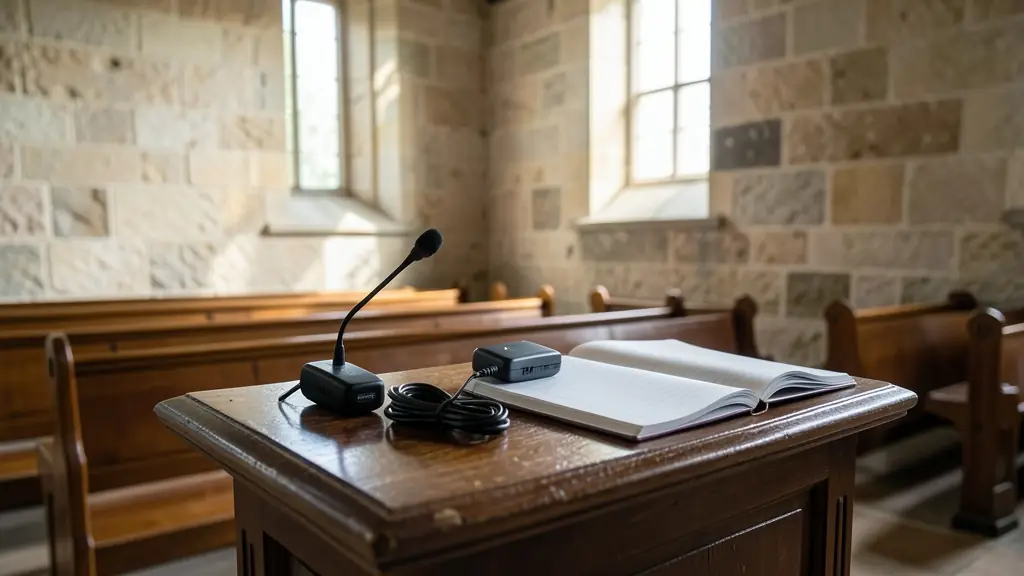
Viewers forgive a soft shot. They switch off when they cannot hear the vows. A wireless microphone puts a tiny mic a hand's width from the speaker's mouth and sends the sound to a receiver on the camera, so the words stay clear when the camera sits twenty metres back at the end of the aisle. This page covers lapel kits, handhelds, shotgun mics, backup recording, range in crowded venues, and how to connect it all to a camera or a phone.
Lapel, handheld or shotgun: which mic does which job
- Lapel (lavalier) kit: a matchbox sized transmitter on the belt, a mic clipped to a shirt or tie, a receiver on the camera's hot shoe. The default for interviews, officiants and the groom.
- Two channel kit: two transmitters into one receiver, so the couple, or a host and a guest, each get a track. Ask for it to record the channels separately so one can be fixed without touching the other.
- Wireless handheld: for speeches and MCs who like to hold something. Hand it over and nobody fiddles with their collar.
- Shotgun mic on the camera: picks up what the lens points at, good for ambience and close action, weak for a speaker three metres away.
Record a backup inside the transmitter
Many current transmitters record onto their own memory while they transmit. Switch it on. Radio drops out when a body blocks the signal or someone walks between pack and receiver, and the internal file fills the gap in the edit. Some kits record in 32 bit float, which makes a shout during the speeches hard to clip. Write down which pack went on which person, because at 11 pm every file looks the same. Pair this with a recorder on the lectern or a feed from the venue's sound desk and you have three chances at the same words.
Range, interference and a full reception hall
The range on the box is measured in an open field. A hall with 200 guests, each with a phone, plus the band's gear and the venue wifi, is a different place. Most small kits work in the crowded 2.4 GHz band, so keep the receiver in line of sight, raise it above head height on a stand, and run a test with the room full, not empty. Dedicated UHF systems cope better on big stages. Clip the mic under the second shirt button, tape the cable flat, and keep it clear of necklaces and beads that tap.
Batteries and connections
Built in batteries last several hours, then die without much warning. Charge everything the night before and keep the charging case or a power bank in the bag; the battery runtime calculator helps you count. Check the cable before the day: cameras take a 3.5 mm TRS plug, phones need TRRS or a USB C or lightning adapter, and bigger cameras want XLR. Phone shooters should read phone videography kit; camera buyers, video cameras.
What to put in your request
- Say camera, phone or both
- Give the number of people to mic at once
- Mention the venue size and crowd
- Ask whether it records internally
- Say buy or hire, and for how long
Wireless Microphones: who asks for them and why
- Couples and their families: a lapel on the groom and the officiant so the vows reach the film clearly
- Families: matric dances, 21sts, memorials: a handheld passed between speakers at a 21st so every toast is heard
- Companies, SMEs and agencies: two lapels for an interview with a manager and a staff member in an office
- Event organisers, venues and conference planners: panellists on stage each wearing a pack, recorded on separate channels for the edit
- YouTubers, podcasters and content creators: a clip on mic for a vlog that keeps the voice clear in a noisy street
- Musicians, bands, DJs and choirs: a lapel on the artist for behind the scenes clips while the track plays loud
- Estate agents, developers, lodges and venues: an agent's voice over recorded on the walk through, not dubbed later in a studio
- Churches, schools, NGOs and sports clubs: a pastor's lapel feeding the stream while the internal file keeps a clean copy