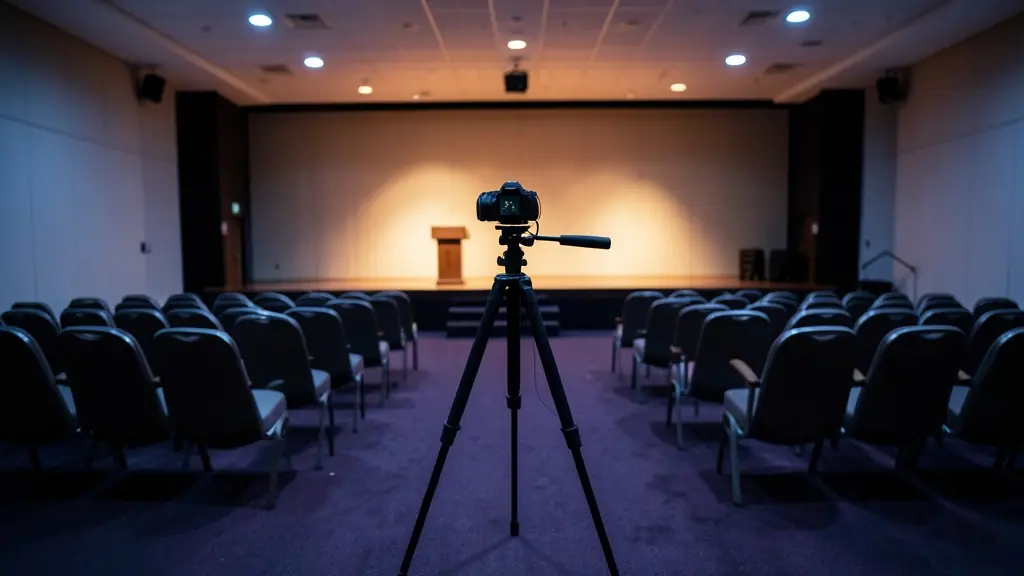
Most of the footage that matters at a wedding or a conference is shot standing still: the vows, the speeches, the keynote, the interview. A good camera tripod keeps those frames dead level for an hour and lets you follow a speaker who wanders off the mark without the picture jerking. The difference between a photo tripod and a video one is mostly in the head, and that is what you need to tell the supplier about before they quote.
Photo tripod or video tripod
A photo tripod uses a ball head that locks hard in one position, perfect for a still frame and useless for a pan, because it moves in little jumps once loosened. A video tripod has a fluid head: sealed drag that resists your hand evenly, so a slow pan across a reception hall starts and stops softly. It also has a pan handle, a sliding plate for front to back balance and often a bubble level on a half ball bowl so you can level the head without fiddling with each leg.
Payload, height and the spreader
- Payload: add the camera, lens, mic, monitor and battery. A head rated close to that weight will sag or need too much drag; pick one with room to spare and adjustable counterbalance.
- Height: at a seated wedding you need to clear the guests' heads from the back row, so check the height with the centre column down.
- Spreader: a ground or mid level spreader stops legs slipping on a polished church floor and sets up fast on a dark stage.
Long ceremonies and conference days
A locked off camera on a sturdy tripod is your safety shot. For a 90 minute church service or a full day of panel sessions, one tripod at the back holds a wide while a second operator moves. Plan the framing with the field of view calculator so the lectern and the screen both fit from where the venue lets you stand. Tape the legs down where the aisle is busy. If you are streaming the event, see live streaming services for how crews set up several fixed cameras.
Monopods, sliders and the weight you carry
A monopod with small feet is quick between moments at a reception and takes a camera's weight off your arms, but it will not hold a locked off shot on its own. A slider on two light stands or on the tripod adds slow sideways movement for product shots and interviews. Carbon fibre legs save weight on a hike to a mountain ceremony; aluminium costs less and survives the bakkie. Add the carry case to your list, and pair the tripod with a gimbal for walking shots.
What to put in your request
- Give the full weight of your camera setup
- Say the height you need to shoot over guests
- Mention floors: lawn, church tiles, stage
- Say if you need legs, a head or both
- Ask if a carry case is included
Camera Tripods: who asks for them and why
- Couples and their families: a locked off wide of the vows and speeches from the back of the venue
- Families: matric dances, 21sts, memorials: a steady frame of a christening or a 21st speech when nobody is behind the camera
- Companies, SMEs and agencies: a level interview frame for staff testimonials and a CEO message in the boardroom
- Event organisers, venues and conference planners: tripods at the back of a conference hall holding the stage for every keynote
- YouTubers, podcasters and content creators: a fixed camera for podcasts, unboxing videos and talking head lessons at home
- Musicians, bands, DJs and choirs: a locked off wide of a live session while a second camera moves around the band
- Estate agents, developers, lodges and venues: a slider on a tripod for slow reveals of a kitchen or a lodge view at dusk
- Churches, schools, NGOs and sports clubs: fixed cameras on church services, prize givings and school concerts every week