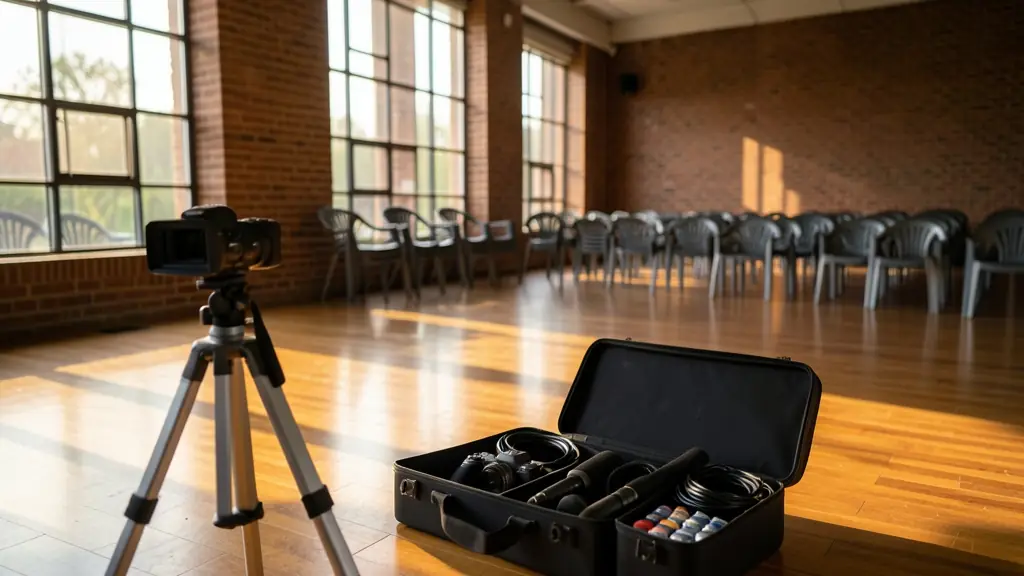
A videographer films people, places and occasions and turns the hours of footage into a film somebody will actually sit through. In South Africa that can mean one operator with two cameras in the back of a bakkie covering a matric dance in Durban, or a crew of four with a sound recordist and a drone pilot on a platinum mine outside Rustenburg. Good videography services handle the whole chain: brief, shoot, backup, edit, music, colour and export. Here is how that chain works, what kinds of shoot exist and how quotes are put together.
From the first phone call to the file on your drive
- The brief. What the film is for, who will watch it, where it plays and how long it should run.
- Planning. Times, the venue, where the light comes from, where the plugs are and what happens if load shedding hits at 6 pm.
- The shoot. Cameras, sound and, if allowed, a drone.
- The backup. Every card copied to two separate drives that night, before anything is wiped.
- The edit. Selecting, cutting, music, colour and a sound mix. As a rule of thumb a polished film costs several hours of editing per finished minute, so the edit usually takes far longer than the day itself.
- Delivery. Files for a TV, a projector, a website and an upright 9:16 version for phones.
The kinds of shoot, and where to read more
- Weddings, lobola and traditional ceremonies: wedding videography.
- Brand films, training and inductions: corporate video production.
- Conferences, galas and launches: event videography.
- Aerials over farms, estates and building sites: drone videography.
- Also music videos, property walkthroughs, live streams and short clips for the social apps, each with its own page in the menu.
One operator or a full crew
One person can handle a talk, a small birthday or a single interview: a camera on a tripod, a second camera locked off on a wide, a lapel mic on the speaker. The moment two things happen at once, say the bride and groom dressing in different houses or a keynote running while a panel starts next door, you need a second shooter. Bigger jobs add a sound person, a drone pilot or a stream director. Crews quote per hour, per half or full day, or per package, and travel outside the metro and a night's accommodation are often added on top. The budget estimator gives a rough figure before you ask.
What separates a careful videographer from a lucky one
Listen before you look: crisp picture with muddy speeches is a failed film. Ask to watch one complete project, not just a two minute reel cut from their best ten seconds of every job. Ask how many spare batteries and cards they carry and how they back up. Then get the hours, crew, number and length of films, delivery date, deposit and overtime rate written down before you pay anything.
What to put in your request
- Say what the film is for and who watches it
- Give the date, venue and hours to cover
- Say how many films and roughly how long
- Mention drone, live stream or raw footage
- Ask for the delivery date in writing
Videographers: who asks for them and why
- Couples and their families: a wedding, a lobola day or an engagement filmed and cut into a short film and a long edit
- Families: matric dances, 21sts, memorials: a matric dance, a 21st, a christening or a memorial kept for grandparents and cousins overseas
- Companies, SMEs and agencies: product clips, staff interviews and a brand film for the website and the sales team
- Event organisers, venues and conference planners: a conference keynote, a gala or an expo recorded in full with a short recap afterwards
- YouTubers, podcasters and content creators: a channel trailer, a course module or a showreel shot properly once instead of redone weekly
- Musicians, bands, DJs and choirs: a music video, a live session in a studio or a concert filmed from three angles
- Estate agents, developers, lodges and venues: a listing walkthrough with aerials of the estate, cut for the portals and for phones
- Churches, schools, NGOs and sports clubs: a church anniversary, a school prize giving or an NGO appeal film for donors