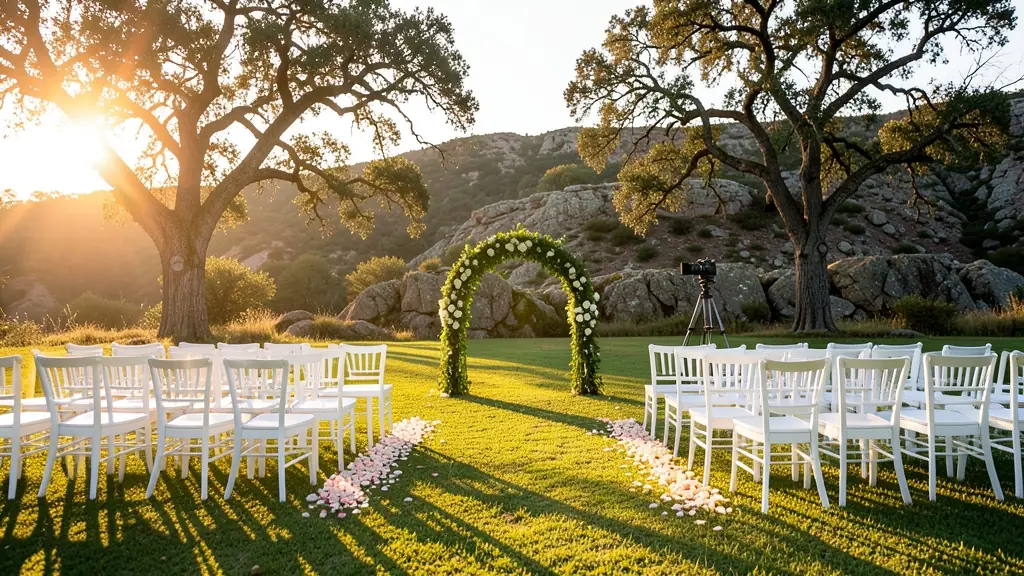
A wedding videographer has one shot at every moment that matters: the walk in, the vows, the ring, the kiss, the speech your uncle swore would be short. Nothing can be repeated, so wedding videography is mostly planning, positioning and sound. Take the Pretoria couple marrying at a Magaliesberg venue in April, with the lobola a month earlier at the bride's family home: two different days, two different crews of guests, two very different films. Here is how a working videographer approaches both.
The day in the order it gets filmed
Coverage usually runs 6 to 10 hours. It starts with getting ready: details, the dress, a nervous father fiddling with his tie. Then the ceremony, whether that is a church, a garden arch, a hall or a traditional ceremony in a family yard where the elders speak and the negotiations of the lobola are done. Portraits come next, then the entrance, speeches, cake and first dance. Most crews leave an hour or so into the dancing. Build in buffer: a ceremony that starts 40 minutes late pushes everything back, and the photographer will want the golden hour portraits too. Map your times in the wedding video timeline planner to see where overtime would start.
Why two shooters beat one
The bride and groom dress in different places, often kilometres apart. During the vows one camera holds the couple while the other catches the groom's face as she walks in, or the mother crying in row two. One shooter has to choose; two do not. A second operator also means a camera keeps rolling while the first changes a battery. If your guest list runs past about 120, or the venue has a separate ceremony and reception space, ask for two.
Getting the vows and the speeches on audio
The camera mic at the back of a church hears the aircon and the baby, not the vows. A careful crew clips a small lapel transmitter on the groom, puts a pocket recorder on the lectern or next to the officiant and takes a line from the DJ's desk for speeches. Ask the DJ beforehand, and make sure the MC uses the handheld mic, not a projected voice. More on the kit: wireless microphones.
Highlight film, full ceremony, or both
The highlight film is the short one, usually 3 to 6 minutes set to a song, that you send to friends the week it arrives. A documentary edit runs 20 to 60 minutes and keeps the full ceremony and every speech, the one your children will watch. Most couples want both. Settle which films, their lengths and the delivery date in writing, and compare what each package includes. If a photographer is also booked, read photography and videography on sharing the aisle.
What to put in your request
- Give the date, venue and ceremony start time
- Say if getting ready is in two places
- Mention a lobola or second ceremony day
- Say which films you want and their length
- Ask what overtime costs per hour
Wedding Videography: who asks for them and why
- Couples and their families: the getting ready, vows, speeches and first dance cut into a highlight and a long edit
- Families: matric dances, 21sts, memorials: a parent's speech or a grandmother's blessing kept in full for relatives who could not travel
- Companies, SMEs and agencies: a wedding venue commissioning a styled shoot to show off its chapel and lawns
- Event organisers, venues and conference planners: a wedding planner who wants a short film of the set up and the finished room
- YouTubers, podcasters and content creators: a couple who share their wedding on their own channel and need an upright cut
- Musicians, bands, DJs and choirs: a live band or a choir at the ceremony recorded clean from the sound desk
- Estate agents, developers, lodges and venues: a guest farm or wine estate using wedding footage to sell its function venue
- Churches, schools, NGOs and sports clubs: a church wedding where the congregation choir and the minister's sermon both matter