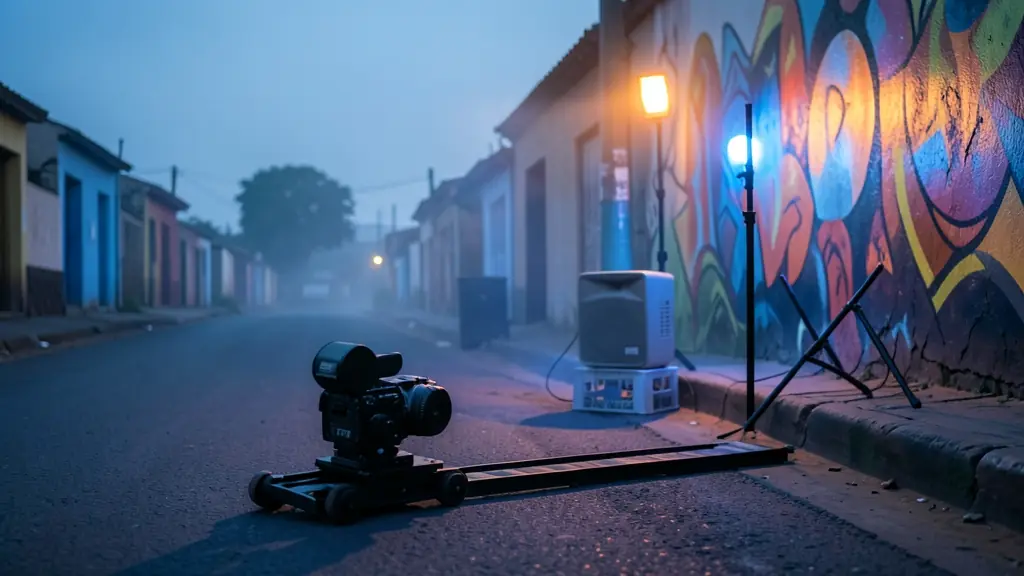
A song can sit on the streaming apps for months and do little, then a three minute clip gives people something to share. Music video production is the work of turning that track into pictures: an idea written down as a treatment, a location or a built set, a performance lit and filmed to playback, and an edit and grade cut to the beat. Music video makers range from one shooter with a gimbal to a director, a camera team and a gaffer, and the budget decides which you get.
Start with a treatment, not a shot list
Before anyone talks cameras, ask for a treatment: one or two pages saying what the video is about, where it happens, how it looks and a handful of reference stills. It is how you judge whether a crew understands the song. A performance video in one location is the cheapest shape; a story with actors, three locations and a night exterior is a different budget. The budget estimator gives a rough feel for how hours and crew add up.
Director or videographer: who runs the day
A videographer films well and edits fast. A director owns the idea, casts, blocks the moves and tells the camera what each verse needs. For a simple live session a strong videographer is enough. For a concept piece you want someone with directed videos on their reel, not only events. Many look cinematic because of planned shots, shallow focus and a strong grade; videography versus cinematography explains the difference.
The shoot day, hour by hour
- Call time: crew in early to light while the artist does hair and wardrobe.
- Playback: the track runs loud from a speaker so the lip sync lands; full takes of the song from several angles first, close ups after.
- Light: a performance lives on contrast and colour. Hired lights and haze do more than a costlier camera.
- Wrap: cards copied to two drives before anyone leaves the location.
Shooting at 50 fps to play back at 25 gives slow motion, but the playback must then run at double speed for the lips to match. Agree this before the day.
Locations, permits and the people in frame
A street, a taxi rank, a mall or a beach often needs the owner's or the municipality's permission, and a drone shot needs a licensed operator. Extras and passers by should know they are being filmed and agree to it; children need a parent's consent. Ask the crew who arranges permissions and who pays for them. After the shoot, the edit and the grade usually take longer than the day itself.
What to put in your request
- Send a link to the track, even a demo mix
- Describe the idea or ask for a treatment
- List locations you have in mind and access
- Say if you need vertical cuts and BTS clips
- Give your release date so the edit fits it
Music Video Production: who asks for them and why
- Couples and their families: a first dance song performed live by a friend's band and cut as a short clip
- Families: matric dances, 21sts, memorials: a family choir or a gospel group filmed singing at home for relatives abroad
- Companies, SMEs and agencies: a jingle or a brand anthem filmed with a local artist for a campaign launch
- Event organisers, venues and conference planners: a festival headliner's set filmed from three angles and cut into a single song video
- YouTubers, podcasters and content creators: a cover song or an original filmed for a channel with a vertical cut for reels
- Musicians, bands, DJs and choirs: an amapiano, gqom or rock single given a performance or story video for release
- Estate agents, developers, lodges and venues: a loft, warehouse or farm rented out as a music video location for a day
- Churches, schools, NGOs and sports clubs: a school or church choir recording one piece on video for a fundraising appeal