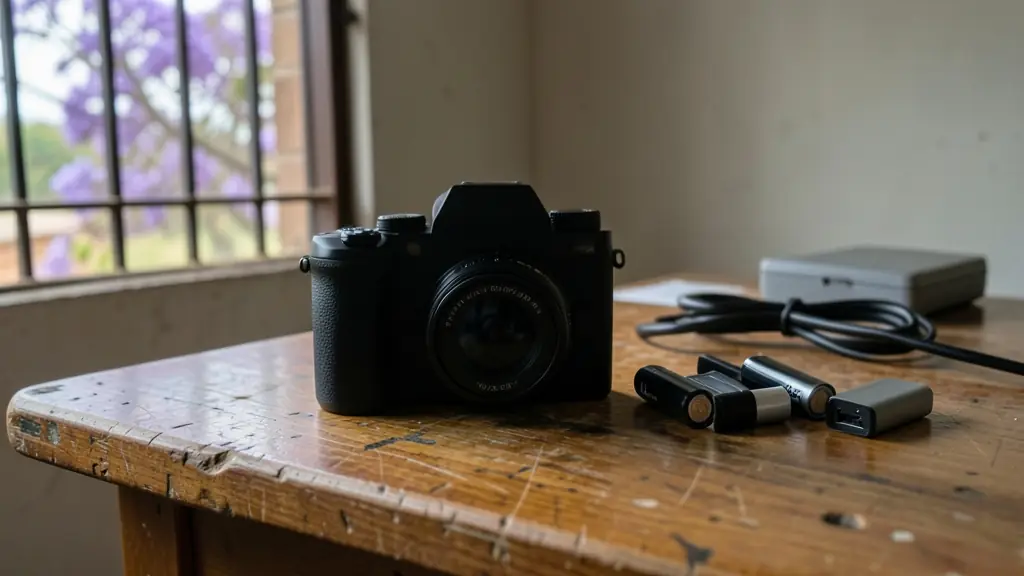
Ask ten people for the best camera for videography and you get ten model names. A video camera is chosen by the jobs it must survive: a 50 minute church service without stopping, a lapel mic plugged straight in, a long day on one charge, footage that holds up when the editor pushes the colour. Start from those, and the camera shops, importers and used gear sellers who quote you can match a body to the work instead of selling you the newest box on the shelf.
Four kinds of camera and the work each suits
- Mirrorless: small, swaps lenses, shoots stills too. The usual first serious body for weddings, reels and interviews.
- Cinema camera: built for long takes, with proper audio inputs, cooling and often a built in ND filter. Heavier, and it needs a rig.
- Camcorder: fixed zoom lens, long battery life, two card slots and handles you can grab. Ideal for conferences, sport and Sunday services.
- Action camera: tiny and tough, for a bakkie bonnet or a helmet. A second angle, never your main camera.
Sensor, frame rates and the 10 bit question
A full frame sensor sees wider at the same focal length and copes better in a dim hall; an APS-C or Super 35 body crops about 1.5x, which suits longer lenses and costs less. Shoot 25 fps, the South African broadcast standard, and look for 50 fps in 4K if you want slow motion played back at 25. A 10 bit codec, often with a log profile, gives the grade room to fix a blown sky or a yellow marquee; 8 bit footage breaks up into bands when pushed. Check the bitrate too: at 100 to 150 Mbps one body writes somewhere near 45 to 70 GB in each hour of recording, so work out cards with the footage storage calculator.
What makes a camera stop in the middle of the vows
Heat and limits. Some small bodies shut down after a stretch of 4K in a hot Durban hall, or split clips, or cap a single recording. Ask the supplier how long the exact body records in 4K at 25 fps before it warns you. Then ask about batteries: how many minutes of real recording one gives, whether it charges over USB in the bakkie and whether it runs from a dummy battery on mains. The battery runtime calculator tells you how many spares to carry.
The parts of a first kit nobody mentions
The body is only part of the bill. Add one or two lenses, three batteries, two fast cards, a mic (see wireless microphones, since sound matters more than picture), a tripod and a backup drive. Used is fine if the seller shows every port working. If you only need a cinema camera for one weekend, hire it first.
What to put in your request
- Say what you film most and for how long
- Mention lenses or batteries you already own
- Ask for record time in 4K at 25 fps
- Say if used or demo stock is fine
- Ask whether warranty is local or import
Video Cameras: who asks for them and why
- Couples and their families: a relative's mirrorless body set on the second angle for the ceremony and speeches
- Families: matric dances, 21sts, memorials: a camcorder that records a whole matric dance arrival without stopping or overheating
- Companies, SMEs and agencies: an in house camera for training videos, product clips and a monthly message from the CEO
- Event organisers, venues and conference planners: camcorders with long battery life for full keynotes and panel sessions on conference days
- YouTubers, podcasters and content creators: a first serious body for a channel, with a flip screen, mic input and clean 4K
- Musicians, bands, DJs and choirs: a cinema camera with log footage and room in the grade for a moody performance video
- Estate agents, developers, lodges and venues: a body with a wide lens and steady footage for walkthroughs of listings and lodges
- Churches, schools, NGOs and sports clubs: a church or school camera that runs on mains power through a whole Sunday service